
Missing teeth can affect more than just your smile. They can make chewing difficult, affect speech and cause nearby teeth to shift over time. Whether you have lost one tooth or several, replacing missing teeth can help restore your ability to eat comfortably, maintain proper bite alignment and feel confident about your smile.
Fortunately, modern dentistry offers several tooth replacement options to suit different needs, preferences and oral health conditions. Understanding how each option works can help you make an informed decision with your dentist.
1. Dental Implants
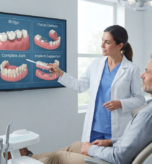
Dental implants are a popular long-term solution for replacing missing teeth. They consist of a small titanium post that is surgically placed into the jawbone to act as an artificial tooth root. Once the implant integrates with the bone, a custom-made dental crown is attached to complete the restoration.
Benefits of Dental Implants:
- Look and function like natural teeth
- Provide a stable and secure fit
- Help preserve jawbone structure
- Do not require support from neighboring teeth
- Can last many years with proper care
Dental implants are generally suitable for patients with healthy gums and sufficient jawbone support. A dental evaluation is necessary to determine eligibility.
2. Dental Bridges
A dental bridge is used to replace one or more missing teeth in a row. It consists of artificial teeth held in place by crowns attached to the natural teeth on either side of the gap.
Benefits of Dental Bridges:
- Restore the appearance of your smile
- Improve chewing and speaking ability
- Provide a fixed tooth replacement option
- Usually require less treatment time than dental implants
- Help prevent neighboring teeth from shifting into the empty space
Dental bridges are a practical option when the surrounding teeth can provide adequate support. However, the supporting teeth generally need to be reshaped to accommodate the crowns.
3. Partial Dentures
Partial dentures are removable appliances designed to replace one or several missing teeth. They typically consist of replacement teeth attached to a gum-colored base and may use clasps or other attachments to stay in place.
Benefits of Partial Dentures:
- Replace multiple missing teeth
- Can be removed for cleaning
- Usually more affordable than fixed replacement options
- Do not require surgery
- Can be customized to fit your mouth
Partial dentures are particularly useful when several natural teeth remain. They can restore basic chewing function and improve the appearance of your smile.
4. Complete Dentures
Complete dentures are removable appliances used when all teeth in the upper or lower jaw are missing. They are designed to rest on the gums and recreate the appearance and basic function of natural teeth.
Benefits of Complete Dentures:
- Replace an entire arch of missing teeth
- Restore facial appearance and smile aesthetics
- Improve speech and chewing compared to having no teeth
- Offer a non-surgical tooth replacement option
- Can be customized for a comfortable fit
Dentures may require adjustments over time as the shape of the jawbone and gums changes. Regular dental visits help ensure they continue to fit properly.
5. Implant-Supported Dentures
Implant-supported dentures combine the stability of dental implants with the convenience of dentures. Instead of resting entirely on the gums, these dentures attach to dental implants placed in the jawbone.
They can be designed as removable or fixed restorations, depending on the treatment plan.
Benefits of Implant-Supported Dentures:
- Offer greater stability than conventional dentures
- Reduce slipping while eating or speaking
- Improve chewing efficiency
- Provide additional support for full-arch tooth replacement
- Help maintain jawbone structure through implant stimulation
This option may be suitable for patients who are missing most or all of their teeth and want more stability than traditional dentures can provide.
How Do You Choose the Right Tooth Replacement Option?
The best tooth replacement solution depends on several factors, including:
- Number of Missing Teeth: Replacing one tooth may require a different approach than replacing several teeth or an entire arch.
- Jawbone Health: Dental implants require sufficient bone support for successful placement.
- Gum Health: Healthy gums are important for supporting dental restorations.
- Budget: Different treatment options have different costs, maintenance requirements and long-term considerations.
- Personal Preferences: Some patients prefer fixed restorations, while others are comfortable with removable options.
Your dentist can evaluate your oral health, discuss your expectations and recommend an option that suits your individual needs.
Why Is It Important to Replace Missing Teeth?
Leaving missing teeth untreated can lead to several oral health concerns over time. These may include:
- Shifting Teeth: Nearby teeth may gradually move into the empty space, affecting alignment.
- Difficulty Chewing: Missing teeth can make it harder to bite and chew certain foods.
- Bite Problems: Changes in tooth alignment may affect how your upper and lower teeth come together.
- Jawbone Loss: When a tooth is missing, the underlying jawbone may gradually lose density due to reduced stimulation.
- Changes in Facial Appearance: Significant tooth loss and jawbone changes can affect facial support.
Replacing missing teeth can help restore oral function and reduce the risk of certain complications.
Restore Your Smile With the Right Tooth Replacement Solution
You do not have to live with the discomfort or inconvenience of missing teeth. From dental implants and bridges to partial and complete dentures, several treatment options can help restore your smile and improve everyday oral function.
The right choice depends on your dental health, the number of missing teeth and your long-term goals. Schedule a dental consultation to explore your options and find a tooth replacement solution that works for you.